

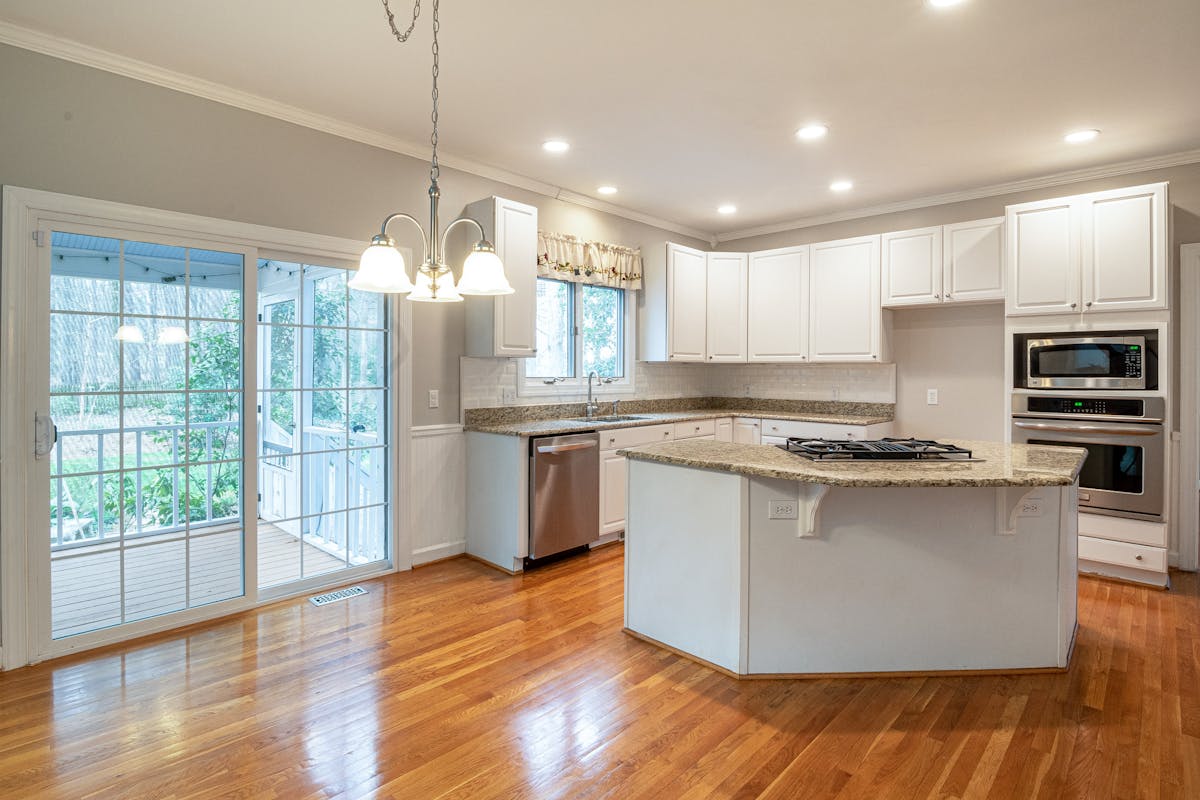
Good lighting transforms a kitchen from merely functional to truly beautiful. It affects how colours appear, how easy tasks are to perform, and the overall atmosphere of the room. Here’s how to create a lighting scheme that works.
The Three Layers of Kitchen Lighting
Professional kitchen design uses three types of lighting working together:
1. Ambient Lighting
This is your general, overall illumination. Ceiling-mounted fixtures, recessed downlights, or a statement pendant provide the base layer of light that illuminates the whole room.
2. Task Lighting
Focused light where you need it most – under wall units to illuminate worktops, inside cabinets, and over the hob. LED strips are efficient and effective, while adjustable spotlights offer flexibility.
3. Accent Lighting
The finishing touch that adds atmosphere and highlights features. In-cabinet lighting shows off glassware, plinth lighting creates a floating effect, and decorative pendants over an island add style.
Choosing the Right Colour Temperature
Light colour is measured in Kelvins. For kitchens:
- 2700K-3000K (warm white): Cosy and inviting, good for dining areas
- 3500K-4000K (cool white): Clean and bright, ideal for task areas
- 5000K+ (daylight): Very bright and clinical, rarely used in homes
Dimmer Switches
Installing dimmers gives you flexibility. Bright lights for cooking, dimmed lights for entertaining – the same kitchen serves different purposes throughout the day.
Planning Your Lighting
Consider where you’ll stand when cooking, eating, and socialising. Ensure worktops are well-lit without shadows. Place switches conveniently near doors. Our design team can create a lighting plan tailored to your kitchen layout.